Why Enterprises Choose our Team for Scalable Mobile App Development Across iOS, Android, Flutter & React Native
Why Enterprises Prefer O Clock Software Pvt Ltd for Scalable Mobile App Development Across iOS, Android, React Native & Flutter
Most mobile applications do not fail because of bad ideas. They fail quietly under architectural pressure.
The product launches successfully. Early adoption looks promising. Teams move fast for the first few months. Then growth starts exposing everything underneath — fragmented APIs, unstable releases, duplicated business logic, inconsistent user experiences across platforms, and engineering teams spending more time managing technical debt than building product value. That pattern has become surprisingly common across enterprise mobility.
The modern mobile ecosystem is no longer just about building an app for iOS or Android. Enterprises are now operating inside a much larger digital system where mobile applications sit at the center of customer engagement, operational workflows, AI integrations, analytics pipelines, cloud infrastructure, and real-time business intelligence. The app is no longer the product. The app is the operational interface of the business itself.
That shift is exactly why enterprises are becoming far more deliberate when choosing long-term mobile engineering partners. Increasingly, companies are looking beyond development capacity and focusing instead on scalability maturity, platform thinking, architectural discipline, and product longevity.
At O Clock Software Pvt Ltd, this has shaped the company’s engineering philosophy for years.
“Fast development matters. Sustainable scalability matters more.”
The Real Enterprise Challenge Is No Longer Platform Choice
A few years ago, enterprise conversations were dominated by one question: native or cross-platform? Today, that conversation feels outdated. The real challenge is building a mobile architecture that can evolve continuously without creating operational instability. Enterprises now expect mobile platforms to support AI-driven workflows, real-time synchronization, predictive analytics, connected hardware ecosystems, offline reliability, enterprise security standards, and rapid deployment cycles — often simultaneously.
This changes how engineering decisions are made. Instead of treating Flutter, React Native, iOS, or Android as isolated technology stacks, modern enterprises increasingly treat them as delivery strategies inside a broader product ecosystem. That distinction matters.
O Clock Software approaches mobile development from a systems perspective rather than a framework-first mindset. The goal is not simply to “build apps.” The goal is to engineer scalable digital products that remain maintainable as complexity grows.
This becomes especially important for enterprise organizations operating across logistics, healthcare, retail, finance, warehousing, and SaaS platforms, where mobile systems are deeply connected with operational infrastructure.
“AI is changing architecture faster than it is changing interfaces.”
That reality is already visible inside enterprise product engineering.
Many companies are still treating AI like interface decoration — chat widgets, recommendation cards, or isolated automation features. But enterprises that scale successfully are integrating intelligence deeper into operational workflows, data orchestration, and decision systems.
Mobile platforms now need to support that future from day one.
Traditional Mobile Development vs Modern Scalable Product Engineering
| Traditional Delivery Model | Scalable Enterprise Engineering |
|---|---|
| Platform-focused development | Product ecosystem thinking |
| Separate iOS & Android logic | Shared operational architecture |
| Feature-driven releases | Continuous scalability planning |
| UI-first approach | Infrastructure-first approach |
| Reactive maintenance | Predictive optimization |
| Short-term delivery cycles | Long-term platform evolution |
Why Flutter and React Native Became Strategic — Not Just Cost Efficient
Cross-platform development has matured significantly over the last few years. Enterprises are no longer adopting Flutter or React Native purely to reduce development costs. They are adopting them because operational speed now directly affects business competitiveness.
Users compare every digital product against the best experience they used yesterday.
That changes expectations dramatically.
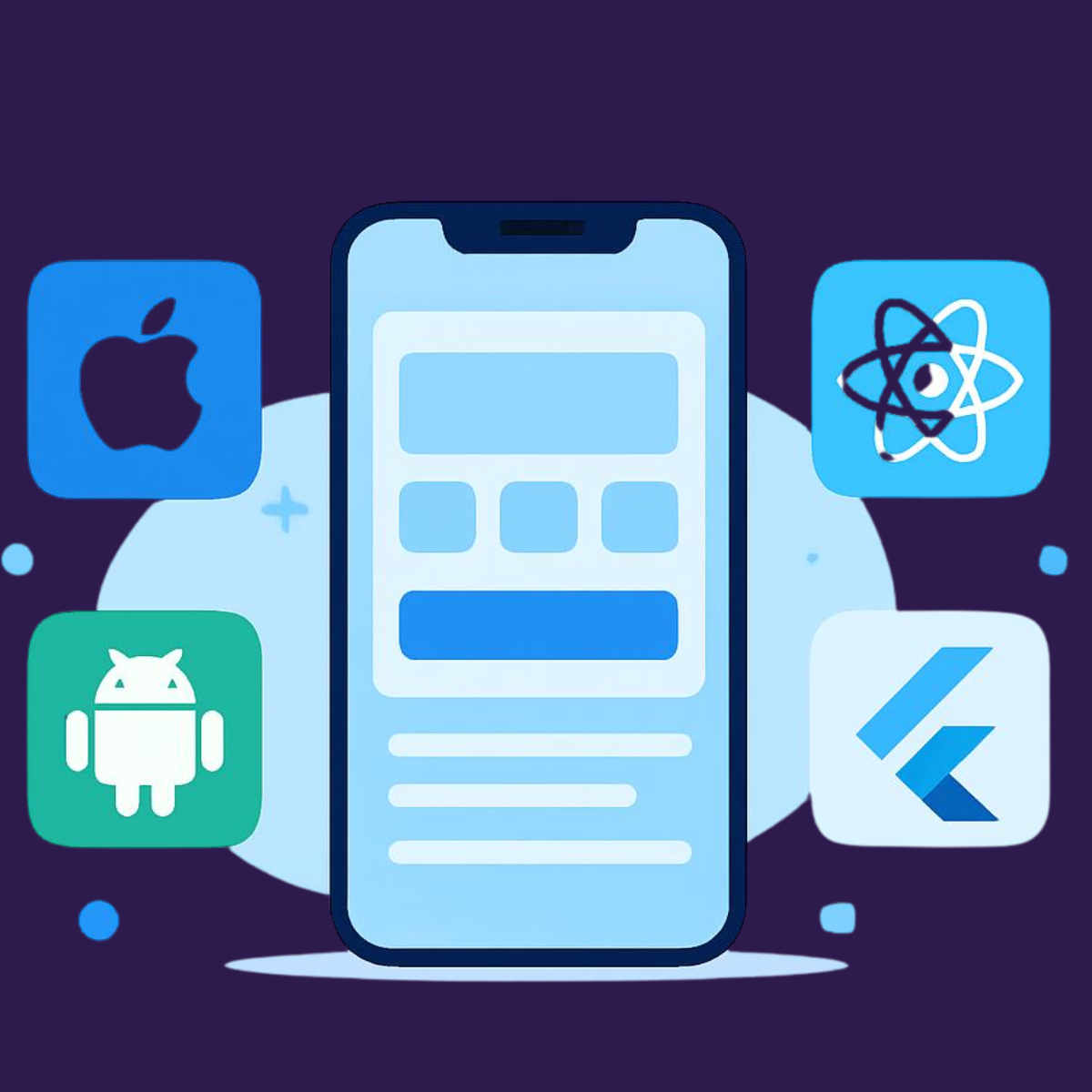
With frameworks like Flutter Developer Hiring and React Native Developer Hiring, enterprises can accelerate deployment cycles while maintaining consistent product experiences across devices. But the framework alone is never the advantage.
Execution quality is.
Many organizations underestimate how quickly poorly structured cross-platform applications become difficult to scale. Shared codebases without architectural discipline often create performance bottlenecks, fragmented state management, release instability, and long-term maintainability issues.
This is where engineering maturity becomes visible.
O Clock Software’s delivery model combines cross-platform acceleration with backend scalability, cloud-native APIs, modular architecture, and enterprise-grade integration planning. The result is not simply faster development — it is operational continuity.
That distinction becomes critical once products begin scaling across users, regions, and enterprise workflows.
Native Engineering Still Matters More Than People Admit
There is another reality many companies discover late.
Some enterprise products still require deep native optimization.
Highly performance-sensitive systems, hardware integrations, enterprise security layers, medical workflows, RFID ecosystems, low-latency applications, and advanced device capabilities often demand specialized native engineering expertise that generic development vendors cannot sustain long term.
This is why enterprise mobility increasingly requires hybrid engineering capability rather than ideological platform loyalty.
At O Clock Software, native development remains a core strength across both iOS Mobile App Developers and Android Mobile App Developers, particularly for enterprise-grade systems where platform-level optimization directly impacts reliability and scalability.
The strongest engineering teams today are not framework evangelists.
They are pragmatic system builders.
“The real competitive advantage is no longer features. It is operational intelligence.”
That single shift is quietly redefining enterprise software strategy.
Reactive Apps vs Intelligent Product Ecosystems
| Reactive Mobile Apps | AI-Integrated Product Ecosystems |
|---|---|
| Wait for user actions | Predict user intent |
| Isolated feature flows | Connected operational workflows |
| Static dashboards | Real-time intelligence |
| Manual support dependency | AI-assisted automation |
| Device-centric thinking | Ecosystem-centric thinking |
Engineering Partnerships Are Becoming Long-Term Strategic Decisions
One of the biggest changes happening in enterprise software today is that companies are evaluating engineering vendors less like outsourced teams and more like strategic product partners.
That is a significant shift.
Enterprises increasingly care about:
- engineering continuity
- release stability
- scalability readiness
- cloud integration maturity
- AI adaptability
- product thinking
- operational reliability
Not just development speed.
This is one reason companies continue partnering with O Clock Software across long-term product initiatives. The organization combines enterprise engineering discipline with the adaptability of a modern product-focused technology partner.
The company’s experience across SaaS platforms, RFID systems, automation products, healthcare solutions, logistics platforms, retail systems, and enterprise mobility creates an unusually practical perspective on scalable software engineering.
Not theoretical scalability.
Operational scalability.
And there is a difference.
Because once enterprise systems begin growing, architecture decisions made in the first six months often determine how expensive the next five years become.
Closing Thought
The enterprise mobile industry is entering a different phase now.
Frameworks are maturing. AI is becoming infrastructure. User expectations are compounding faster than release cycles. And scalability is no longer something companies can “optimize later.”
The strongest mobile products being built today are not simply cross-platform.
They are architecturally intentional.
That is ultimately why enterprises are becoming more selective about who builds their platforms — and why engineering maturity now matters far more than feature velocity alone.
The companies that understand this early tend to scale differently.
And usually, much faster.