RFID Asset Tracking for Smarter Warehouse Visibility
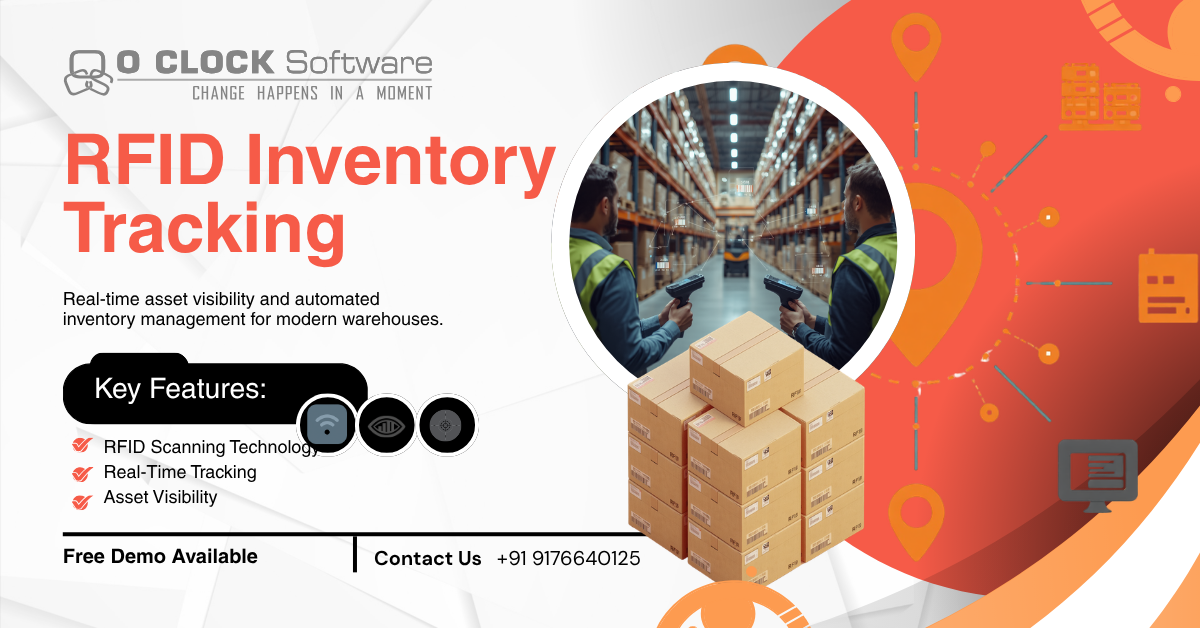
RFID Asset Tracking for Smarter Warehouse Visibility
Warehouses rarely fail because of one major operational mistake.
More often, the decline begins quietly.
A misplaced pallet takes longer to locate. A shipment verification gets delayed because inventory data has not been updated. Audit teams spend entire weekends reconciling spreadsheets against physical stock. Forklift operators rely on verbal confirmations because system visibility is outdated by several hours.
Over time, these inefficiencies accumulate into a much larger operational problem: the warehouse no longer has confidence in its own inventory visibility.
That was the exact situation faced by a mid-sized logistics and warehousing organization managing inventory movement across multiple storage zones and regional fulfillment points.
The business had already grown rapidly. Their warehouse footprint expanded. Inventory movement increased. Asset turnover accelerated. But their tracking systems remained fragmented.
What initially worked for a smaller operation became increasingly difficult to sustain at scale.
The organization approached O Clock Software Pvt Ltd with a clear requirement:
They did not simply want an RFID implementation.
They wanted operational visibility they could trust.
When Warehouse Growth Outpaces Operational Visibility
The warehouse operation was handling thousands of movable assets daily, including pallets, cartons, equipment units, and high-frequency inventory transfers between storage sections.
The problem was not the absence of software.
The real issue was fragmentation.
Several independent systems existed simultaneously:
- manual spreadsheet logging
- barcode scanning workflows
- disconnected audit systems
- delayed backend reconciliation
- isolated inventory reporting modules
None of these systems communicated efficiently in real time.
As inventory movement increased, operational blind spots became more visible.
Warehouse managers struggled with:
- inconsistent stock visibility
- delayed asset location tracking
- time-consuming physical audits
- inventory mismatch escalation
- incomplete movement history
- inaccurate warehouse utilization reports
Operationally, one of the most expensive problems was delay propagation.
If an inventory mismatch was discovered late in the workflow, downstream teams including dispatch, procurement, and customer operations were also affected.
The organization recognized that visibility itself had become an operational dependency.
Why Traditional Barcode Workflows Were No Longer Sufficient
The warehouse initially attempted to improve efficiency through additional barcode-based processes.
That created another challenge.
Barcode systems required:
- line-of-sight scanning
- manual alignment
- repetitive scanning workflows
- higher operator dependency
In fast-moving warehouse environments, those processes slowed movement rather than improving visibility.
RFID presented a more scalable direction because it enabled:
- non-line-of-sight asset scanning
- bulk asset identification
- faster movement validation
- reduced manual intervention
- improved movement traceability
However, deploying RFID in warehouse operations is rarely straightforward.
The technology itself is only one layer.
The larger challenge lies in operational integration.
The system needed to work across:
- unstable network zones
- large warehouse layouts
- continuous movement environments
- offline operational conditions
- multiple device types
- concurrent scanning sessions
This was not simply a hardware deployment project.
It required a complete operational workflow redesign.
Rebuilding Warehouse Tracking Around Real-Time Visibility
Instead of introducing RFID as an isolated module, the engineering approach focused on redesigning the warehouse tracking lifecycle itself.
The solution architecture included:
- RFID-enabled asset tagging
- enterprise mobility applications
- offline-first synchronization
- centralized analytics dashboards
- real-time inventory event processing
- scalable backend synchronization services
The primary objective was simple:
Every inventory movement should immediately contribute to operational visibility.
That philosophy influenced every architectural decision throughout the implementation.
Engineering the Mobile Experience for Warehouse Realities
One of the earliest observations during warehouse walkthroughs was that desktop-centric workflows were slowing operations.
Warehouse teams were constantly moving.
Most operational actions happened:
- between aisles
- during loading operations
- while handling forklifts
- inside restricted connectivity zones
A traditional web-only interface would have introduced additional friction.
The solution therefore centered around an enterprise mobility model built using Flutter for cross-platform operational consistency.
The mobile application was designed specifically for warehouse conditions:
- large touch targets for glove usage
- rapid scan confirmation flows
- minimal interaction steps
- dark operational UI modes
- low-latency screen transitions
- offline data persistence
The engineering focus was not aesthetics alone.
It was operational ergonomics.
Warehouse users needed a system that supported movement speed rather than slowing it down.
Why Offline-First Architecture Became a Critical Decision
One of the most underestimated warehouse technology challenges is network inconsistency.
Certain warehouse zones experienced unstable connectivity due to:
- dense rack structures
- metallic storage interference
- infrastructure limitations
- moving equipment obstruction
A fully online-only architecture would have failed during critical inventory operations.
To address this, the platform adopted an offline-first synchronization model.
The mobile application locally stored:
- scan events
- movement transactions
- validation logs
- inventory checkpoints
- audit records
Once connectivity became available, the synchronization engine automatically reconciled data with centralized services.
This architectural decision significantly improved operational continuity.
Warehouse teams no longer paused workflows because of temporary connectivity interruptions.
Operational execution became resilient rather than network-dependent.
Real-Time Synchronization Without Creating Data Collisions
One of the more complex engineering challenges involved synchronization integrity.
In high-volume warehouse environments:
- multiple users may scan identical assets
- movement events may occur simultaneously
- delayed syncs may overlap with live transactions
Without careful synchronization handling, the system could generate duplicate inventory states or incorrect asset movement histories.
To address this, the backend architecture implemented:
- event-based transaction validation
- timestamp reconciliation logic
- asset-level version control
- conflict resolution workflows
- queued synchronization pipelines
The backend services were designed using scalable API-driven architecture patterns capable of supporting future warehouse expansion.
This ensured the system remained operationally stable even during high concurrency periods.
Dashboard Visibility Changed Operational Decision-Making
Before implementation, warehouse managers often relied on delayed reporting snapshots.
That meant decisions were reactive.
After deployment, the operational dashboard evolved into a live warehouse intelligence layer.
Managers could now visualize:
- asset movement activity
- zone-level inventory density
- delayed movement patterns
- audit discrepancies
- inactive inventory durations
- scan completion status
- operational bottlenecks
The impact extended beyond inventory tracking.
Operational planning itself improved.
Warehouse supervisors could identify inefficiencies before they escalated into fulfillment delays.
Audit Cycles Were Reduced From Days to Hours
Inventory audits had historically been one of the organization’s largest operational pain points.
Audits required:
- multiple staff coordination
- overnight reconciliation
- manual spreadsheet validation
- repetitive physical verification
RFID automation fundamentally changed that workflow.
Because asset movement history was continuously updated, audit teams no longer rebuilt inventory visibility from scratch.
Instead, they validated exceptions.
This dramatically reduced audit effort while improving confidence in inventory accuracy.
More importantly, warehouse operations no longer experienced prolonged disruption during audit periods.
The Business Impact Was Operational, Not Just Technical
The organization initially approached the project as a warehouse modernization initiative.
What emerged was a broader operational transformation.
The RFID platform improved:
- warehouse visibility
- movement accountability
- inventory confidence
- operational responsiveness
- audit efficiency
- staff productivity
- cross-team coordination
One of the most meaningful outcomes was decision confidence.
Operations teams trusted the data again.
That changed how the warehouse functioned daily.
Inventory decisions became proactive rather than corrective.
Scalability Was Built Into the Architecture From the Beginning
A common problem with warehouse systems is that they work well for one facility but become difficult to scale across multiple operational locations.
The architecture was intentionally designed for expansion.
The platform could support:
- multiple warehouses
- distributed inventory zones
- centralized reporting
- role-based operational access
- future ERP integrations
- AI-driven analytics layers
- predictive movement insights
This forward-looking approach prevented the organization from treating the implementation as a temporary operational fix.
Instead, it became foundational infrastructure for future logistics modernization.
Engineering Lessons From the Implementation
Several important implementation realities emerged during deployment.
First, RFID alone does not solve operational inefficiency.
Without workflow redesign, even advanced hardware becomes another disconnected system layer.
Second, warehouse mobility requires operational empathy.
Technology decisions must reflect how warehouse teams actually move, scan, validate, and operate under physical constraints.
Third, synchronization architecture matters more than most organizations initially expect.
Real-time visibility depends heavily on:
- reliable data reconciliation
- offline continuity
- concurrency handling
- event consistency
Finally, enterprise warehouse modernization succeeds when operational teams and engineering teams collaborate continuously throughout implementation.
Technology adoption improves dramatically when the system reflects operational realities rather than theoretical workflows.
Building Operational Trust Through Visibility
Warehouse technology projects are often evaluated based on scanning speed or infrastructure modernization.
But the deeper value usually comes from something less visible.
Operational trust.
When inventory visibility becomes reliable:
- audits improve
- planning improves
- accountability improves
- customer fulfillment improves
- operational stress reduces
That transformation is what ultimately defined this implementation.
By combining RFID infrastructure, enterprise mobility, real-time synchronization, and scalable backend architecture, the organization moved from fragmented warehouse tracking toward a far more connected operational ecosystem.
The result was not simply better technology.
It was a warehouse operation capable of making faster, more informed, and more reliable decisions at scale.